
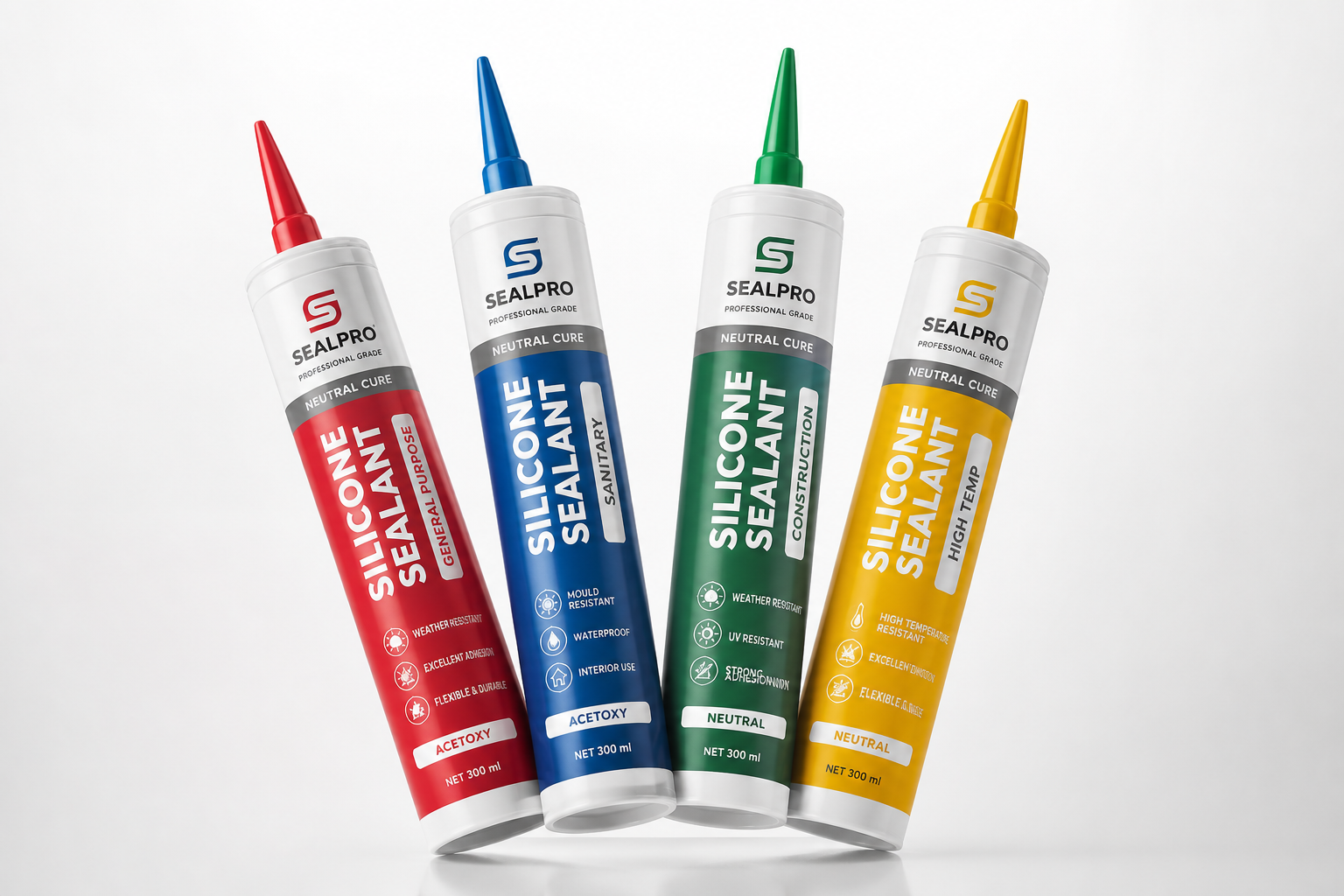
Silicone Sealant is a one-part, moisture-curing, high-performance elastic sealant designed for sealing, gasketing, and flexible bonding applications in composite structures. Unlike epoxy or polyurethane adhesives, silicone remains permanently flexible, absorbing vibration, thermal expansion, and impact without cracking. It provides excellent adhesion to carbon fiber, fiberglass, metals, glass, ceramics, and many plastics. Ideal for sealing joints, creating gaskets, waterproofing composite assemblies, and bonding dissimilar materials.
Key Features
-
Type: One-part, moisture-curing silicone
-
Color: Clear, white, black, grey (other colors available on request)
-
Cure Mechanism: Reacts with atmospheric moisture
-
Flexibility: Permanent elasticity – accommodates thermal expansion
-
Temperature Rating: -60°C to +250°C (-76°F to +482°F)
-
UV Resistance: Excellent – does not degrade in sunlight
-
Waterproof: Forms permanent watertight seal
-
Electrical Insulation: High dielectric strength
How to Use Silicone Sealant on Composites
Step 1: Surface Preparation
-
Ensure surfaces are clean, dry, and free of dust, oil, grease, and release agents
-
Clean with acetone or isopropyl alcohol (IPA)
-
For smooth carbon fiber surfaces, lightly abrade with fine grit sandpaper (optional)
Step 2: Cut Nozzle
-
Cut tip at 45° angle
-
Size opening to desired bead width (3mm – 10mm)
Step 3: Apply Sealant
-
Load cartridge into caulking gun
-
Apply continuous bead into joint or onto surface
-
Press into place firmly
Step 4: Tool / Smooth (Optional)
-
Smooth with spatula or finger dipped in soapy water
-
Remove excess before skin forms
Step 5: Allow to Cure
-
Skin forms in 5 – 15 minutes
-
Full cure in 24 hours (3mm depth)
-
Thicker sections require longer cure time
Step 6: Assembly (If Used as Adhesive)
-
Clamp or hold parts together during cure
-
Allow 24 hours before stress or load application
Reviews
There are no reviews yet.